Celtic is standing at a crucial juncture in the 2023-24 season and finds itself grappling with a unique blend of challenges both on and off the field.
Despite being five points clear atop the Scottish Premiership, the shadow of The Rangers looms large, as their potential victories in games in hand could usurp Celtic from their perch. This precarious position is more than a numerical conundrum; it’s symptomatic of deeper issues that have been simmering within the club.
A Symptom of Deeper Malaise
The recent defeat to Hearts wasn’t just another loss. It was a volcanic eruption of pent-up frustration from the Celtic faithful. For months, there has been a sense that things are not quite right. The victories against Aberdeen and Hibernian, though commendable, couldn’t mask the turgid, uninspired football that’s become an unwelcome norm. This drop in quality, especially after the club’s lacklustre European campaign, has turned the fans’ ire towards the management’s decisions, particularly in the transfer market.
Missteps in the Transfer Window

Celtic’s Callum McGregor and Kyogo Furuhashi applaud the fans after the match Action Images via Reuters/Jason Cairnduff
The recent transfer window, by many accounts, was a disaster. The departure of key players only for them to be replaced by projects. The new signings – Oh, Bernardo, Holm, Kwon, Yang, Palma, Lagerbielke, and Nawrocki to name a few – have not only failed to fill the void but have raised serious questions about the club’s recruitment strategy. The fact that not a single new signing was on the pitch during the crucial moments against Hearts speaks volumes about their impact – or lack thereof.

Governance and the Need for Fresh Perspectives
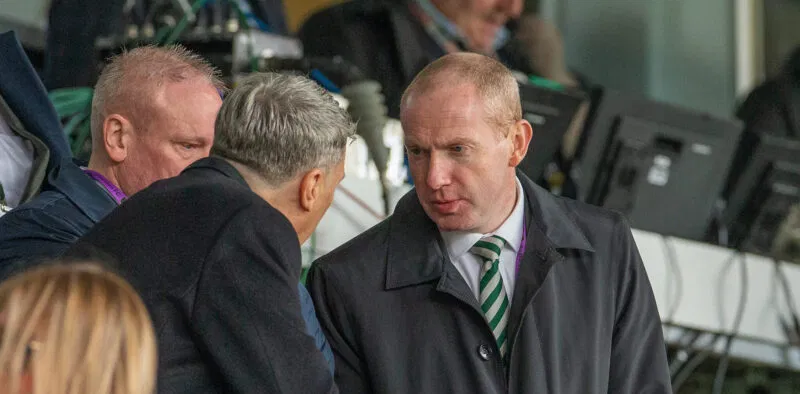
The governance of Celtic, particularly under the stewardship of Chairman Peter Lawwell, has increasingly been perceived as insular and resistant to change. This perception is underscored by the long tenures of its board members, contributing to what many view as an ‘old boys’ club’ atmosphere. The presence of long-standing board members like Thomas Allison (joined in 2001), Brian Wilson (2005), Michael Nicholson (2013), Sharon Brown (2016), and Chris McKay (2016) has led to concerns about the board’s adaptability and responsiveness to the evolving dynamics of modern football.

This static leadership structure poses significant risks. It can lead to stagnancy, where the same ideas and approaches are recycled without consideration for innovative or contemporary strategies. Such a scenario is particularly detrimental in a rapidly changing football landscape, where adaptability and fresh perspectives are crucial for success.
This situation calls for a strategic rethink at the governance level. Introducing new voices and diverse perspectives could invigorate the board’s decision-making process, ensuring that Celtic not only remains true to its rich heritage but also stays competitive. Such changes, though challenging, are essential for a club with Celtic’s stature and ambitions. The appetite for it within the walls of Celtic Park is non-existent, just ask Dom McKay.
The Fans’ Role and the Path Forward
The role of Celtic fans in the club’s trajectory, especially in the aftermath of the lockdown season, is a prime example of loyalty and passion but also highlights a paradox. During the COVID-19 pandemic, the atmosphere among the support was one of palpable discontent. Banners and social media channels were rife with venom and toxicity, directed largely at the board’s decisions and the team’s performance. This unrest led to genuine concerns within the club’s hierarchy about potential impacts on season ticket renewals — a vital financial lifeline.
However, in a remarkable show of loyalty, the fans renewed their season tickets in record numbers. This overwhelming support, while a testament to their commitment to the club, inadvertently insulated the board from the very criticism and unrest that could have spurred necessary changes. The fans, in their bid to support the club during its difficult phase, effectively allowed the board to disregard the underlying issues that were the root cause of their frustrations.

In this context, the path forward for Celtic fans is a complex one. Their support is the lifeblood of the club, yet it’s this very support that has, in some ways, shielded the board from fully acknowledging and addressing the deeper, systemic problems.
For the fans to instigate real change, a more nuanced approach may be required; considering measures that directly impact the club’s financial stability. Such steps, though drastic, might be necessary to ensure that the board not only hears but also acts on the fans’ concerns.
The balance between supporting the team and holding the management accountable is delicate.
The Immediate Future and Hope for Change
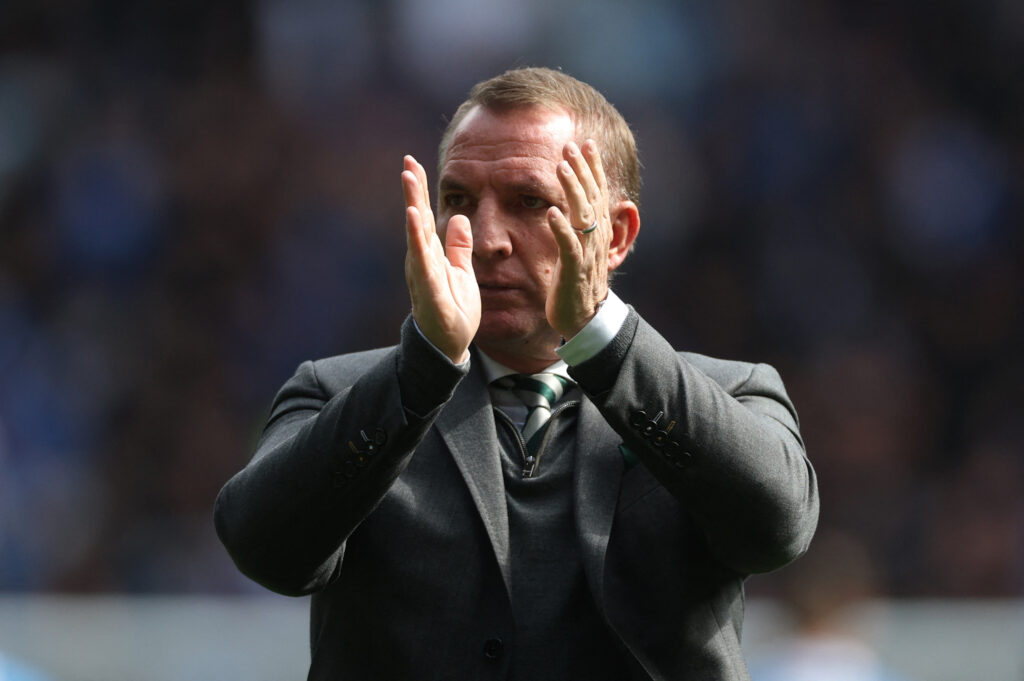
With the league still within reach, Brendan Rodgers faces the daunting task of revitalizing a beleaguered squad. The upcoming winter break could be a turning point. However, even if Celtic clinches the title, it would only be a temporary balm. The club needs to address its deeper issues to ensure long-term success, both in Scotland and in European football.
Celtic’s current predicament is not just a matter of lost points or unconvincing performances. It’s a reflection of systemic issues that need addressing at various levels of the club. The January transfer window and the remainder of the season will be pivotal, not just for the pursuit of the title, but for the very ethos and future direction of the Hoops. The Celtic fans, known for their passion and loyalty, deserve a team that mirrors their aspirations and management willing to evolve and adapt.