Celtic Football Club’s recent fine of €29k by UEFA following the Atletico Madrid game has ignited a pertinent discussion about UEFA’s disciplinary procedures and the necessity for enhanced transparency. This fine is attributed to multiple infractions, including the display of flags deemed inappropriate and blocking passageways within the stadium.
At the heart of the controversy lies the distinction between the waving of Palestinian flags and the display of the PLFP flag, which is categorised as a symbol of a proscribed terrorist organisation. Sources have told CeltsAreHere the fine is NOT for simply waving Palestine flags at the Atletico game. UEFA’s fine, broken down as €17,500 for “a provocative message of an offensive nature,” €8,000 for blocking passageways, and €3,500 for lighting fireworks, has sparked debate among supporters and observers alike.
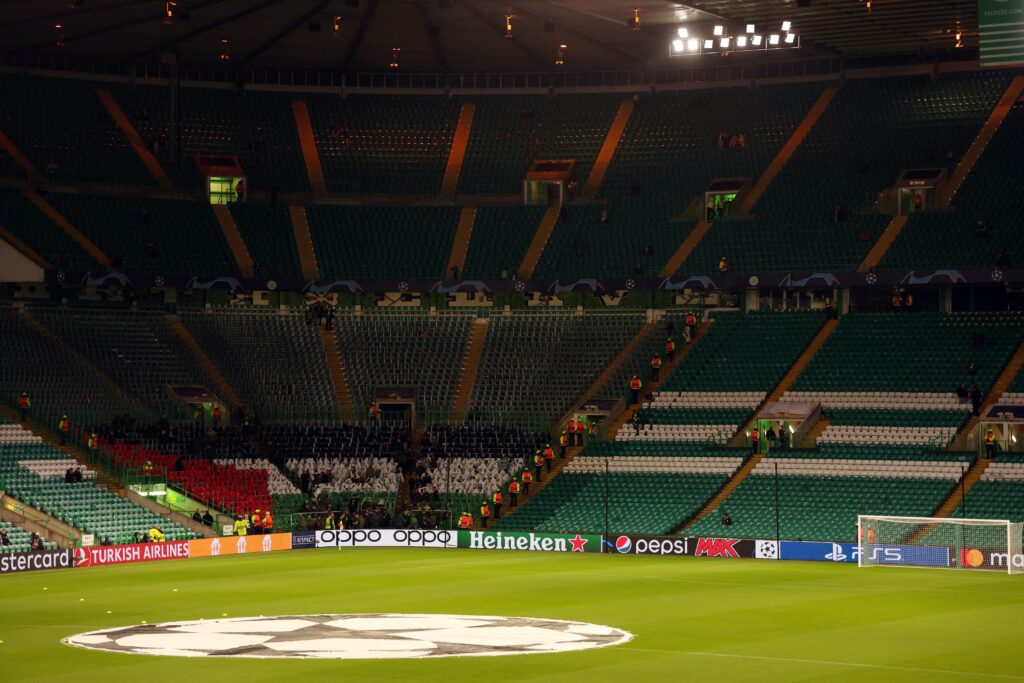
While the penalties for blocking passageways and lighting fireworks are straightforward, the ambiguity surrounding the “provocative message” charge is a major concern. The lack of specificity in UEFA’s communication allows for a wide range of interpretations, leading to confusion and speculation among fans and the media. This vagueness does little to clarify the exact nature of the offense, be it the waving of Palestinian flags or something more.
Transparency in disciplinary proceedings is crucial for several reasons. First, it ensures that clubs and their supporters understand the nature of the offences and the rationale behind the penalties imposed. Second, it fosters a sense of fairness and accountability in UEFA’s disciplinary process. When the governing body fails to provide detailed explanations, it risks undermining its own credibility and the integrity of the sport.
The suspension of the Green Brigade’s season tickets post-Atletico Madrid game further complicates the issue. This decision, while separate from UEFA’s actions, highlights the broader implications of such disciplinary measures on fan groups and their relationship with football clubs.
While UEFA’s right to enforce disciplinary measures is undisputed, the manner in which these are communicated and justified is equally important. The case of Celtic’s fine serves as a poignant example of the need for clear, transparent, and detailed explanations of such actions. This is not just about a fine; it’s about maintaining the integrity and spirit of the game, respecting the rights of supporters, and upholding the principles of fair and transparent governance in football.